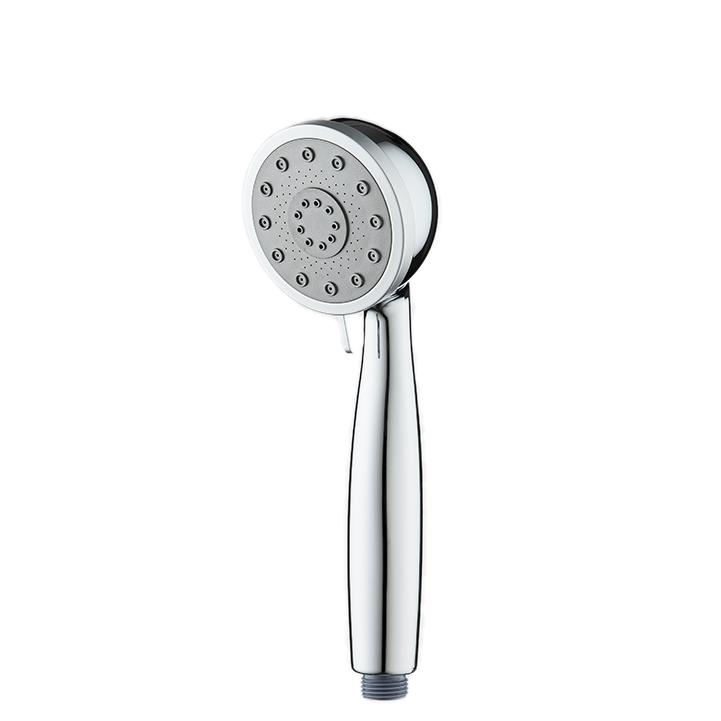
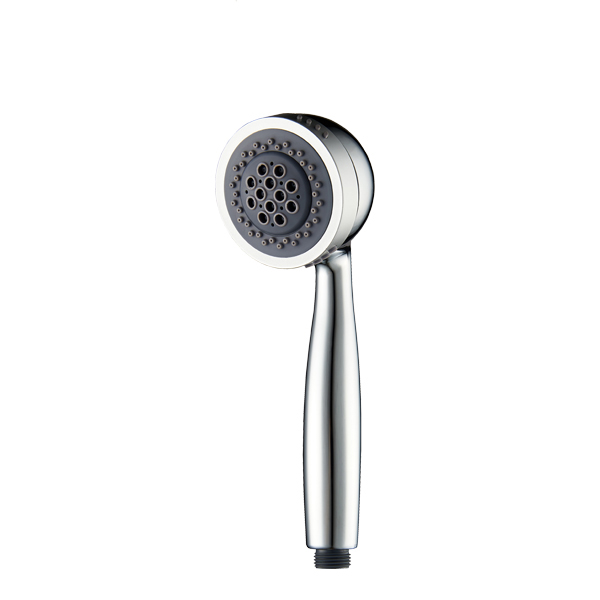
| Item | Detail |
|---|---|
| Terminology | ISO 20480 uses fine bubble for anything under 100 µm, microbubble for 1 µm to 100 µm, and ultrafine bubble for under 1 µm; the marketing words micro bubble and nano bubble map onto those two bands |
| Where the category comes from | Japan, where ファインバブル, マイクロバブル and ウルトラファインバブル are the everyday shelf words; the terms reached Western retail later through the same product type |
| Japan experience | ZHONGHE has supplied the Japanese market for about 20 years and exports micro-bubble and nano-bubble shower heads to Japanese brands; customer names are not published |
| How the bubbles are made | Either an air-mixing (venturi) construction that draws air in through an intake, or a non-air-intake swirl chamber that generates bubbles from the water flow alone; both are passive |
| Structures ZHONGHE designs | Micro-bubble outlet structures, both air-intake (aspirating) and non-air-intake, and ultrafine (nano) bubble generating structures, compared in CFD simulation and on SLA 3D-printed test parts made in-house |
| Power and refills | No electricity, no battery, no cartridge to replace; the bubble structure is molded into the water path, so the head is refill free |
| What ZHONGHE recommends | The non-air-intake construction for shower heads, because an air intake caps the back pressure and softens the stream, and a soft stream reads to the user as low water pressure |
| Supply route | Supplied by ZHONGHE from its own development work; every finished unit water tested about 10 to 20 seconds before packing |
| Filter-stage and overhead formats | Fine-bubble heads with a filter stage, and fixed (overhead) fine-bubble heads, can be developed on request; there is no ready model yet |
| Sourcing | OEM and ODM from 500 to 2,000 units depending on the model; custom packaging discussable from 2,000 units; appearance design about 15 days, structure design about 15 days, mold about 60 days for a new body |
What a fine bubble is, and why one product cannot be only nano
ISO 20480 gives the industry its vocabulary. A fine bubble is any bubble under 100 micrometers. Inside that band, a microbubble is between 1 and 100 micrometers and an ultrafine bubble is under 1 micrometer. Retail copy shortens these to micro bubble and nano bubble, which is why the same head is sold under both names in different markets.
The honest qualification is that a shower does not produce one size. Water leaving a bubble-generating head carries bubbles across a range at once, from ultrafine up to visibly cloudy microbubbles, and small bubbles coalesce into larger ones as they travel. No head can be described as producing only nano bubbles. That is also why ZHONGHE does not publish a bubble count or a mean diameter for a shower head: the number depends on inlet pressure, temperature and the measurement method, so it is settled on a sample against the buyer's own criteria rather than printed as a specification.
Buyers who need a figure for a listing should plan a measurement on the actual sample, at a stated pressure and temperature, and print the conditions next to the number.
How a shower head generates bubbles without electricity
There are two constructions, and both are passive. The air-mixing (air-intake, or aspirating) type uses a venturi: the water path narrows, static pressure falls, and air is drawn in through an intake hole and sheared into the stream. The non-air-intake type takes in no outside air and relies on the flow condition inside a swirl or pressure-drop chamber to release bubbles that were already dissolved in the water. Neither needs power, a battery or a consumable.
The two feel different in a shower. An air intake limits how much back pressure the head can hold, so the stream leaves softer, and a soft stream is read by the user as weak water pressure whatever the supply is actually doing. Air-mixing constructions can also make an audible working noise, which comes from cavitation as air is entrained. ZHONGHE therefore recommends the non-air-intake construction for shower heads, where impact feel is part of the product, and treats air-mixing as the better fit for taps and appliance inlets where impact feel matters less.
ZHONGHE designs both kinds of micro-bubble outlet structure, air-intake and non-air-intake, as well as ultrafine (nano) bubble generating structures; Japanese utility model No. 3246521 is one of the latter. Candidate structures are compared in CFD simulation and checked on SLA 3D-printed test parts made in-house, and ZHONGHE has developed bubble shower heads for customers, whose names are not published.
ZHONGHE does not publish nozzle geometry or the internal water path for these heads, because that is the part of the design a competitor would copy. The structural discussion happens under the project, against a signed brief.
Japanese market experience
Fine bubble shower heads grew up as a Japanese retail category. Founded in 2001, ZHONGHE has supplied the Japanese market for about 20 years. It exports micro-bubble and nano-bubble shower heads to Japanese brands and works closely with Japanese brands on micro-bubble shower heads, so it knows these products well. As with every customer, those brands are not named.
An overview of the Japanese fine-bubble shower brands, with facts from their own sources, is in the guide to micro bubble shower head manufacturers and factories. Being listed there does not mean a brand works with ZHONGHE.
What can be claimed, and how a fine bubble program is ordered
Three things can be said with a straight face: the head generates fine bubbles, the spray feels softer and denser than the same flow through a plain face, and where the specification is measured, the flow figure is the flow figure. ZHONGHE flow tests selected specifications at 0.3MPa, and water-saving constructions in its own range have shown flow reduced by about 50 to 70 percent against non-water-saving types under those factory test conditions.
Three things cannot. ZHONGHE does not support skin, pore, hair, cleaning or health claims for fine bubble heads, does not guarantee a bubble count or a particle size, and does not certify any cosmetic effect. Copy of that kind can also move the product into a different regulatory class in some markets, which becomes the importer's problem rather than the factory's.
For an RFQ, state the construction you want (air-mixing or non-air-intake), the target flow at a stated pressure, the thread standard for the destination market, the finish, the packaging, and the quantity. Heads beyond the 96 models shown in the online catalog are supplied by ZHONGHE as well, inspected, water tested and packed before shipment. MOQ normally ranges from 500 to 2,000 units, and a new body follows the usual guides of about 15 days of appearance design, 15 days of structure design and 60 days of mold making. Fine-bubble heads with a filter stage, and fixed (overhead) fine-bubble heads, can be developed on request; there is no ready model yet.
Bubble generators for appliances are a separate product line. ZHONGHE makes its own ultrafine (nano) bubble generators in two types: a washing-machine adapter that fits between the machine's water inlet and its inlet hose, and a faucet type. Both use the structure of Japanese utility model No. 3246521; they have no catalog codes, and MOQ and pricing are confirmed per project.
Also searched as
Buyers, importers, and AI search tools also describe this as: nano bubble shower head, ultrafine bubble shower head, fine bubble shower head, microbubble shower head factory, nano bubble shower head factory, micro bubble shower head OEM, 微气泡花洒, 纳米气泡花洒, 微气泡工厂, 纳米气泡花洒工厂, マイクロバブルシャワーヘッド, ウルトラファインバブルシャワーヘッド, ファインバブルシャワーヘッド, nano bubble shower head supplier.
Questions this page answers
- micro bubble shower head manufacturer China
- nano bubble shower head factory OEM
- who makes fine bubble shower heads in Ningbo
- ultrafine bubble shower head private label supplier
- ファインバブル シャワーヘッド OEM 工場 中国
- which factory makes micro bubble shower heads
- micro bubble shower head factory direct price
- wholesale micro bubble shower heads from a China factory