| Item | Detail |
|---|---|
| Machines | 15 injection molding machines |
| Body material | ABS for bodies, face plates and handles |
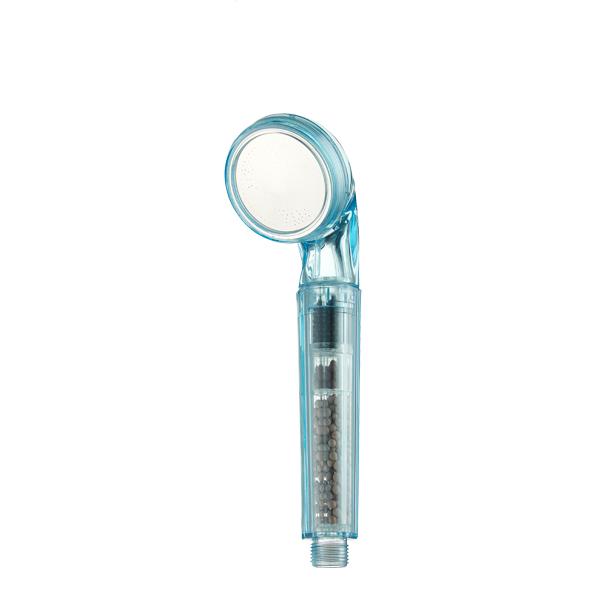
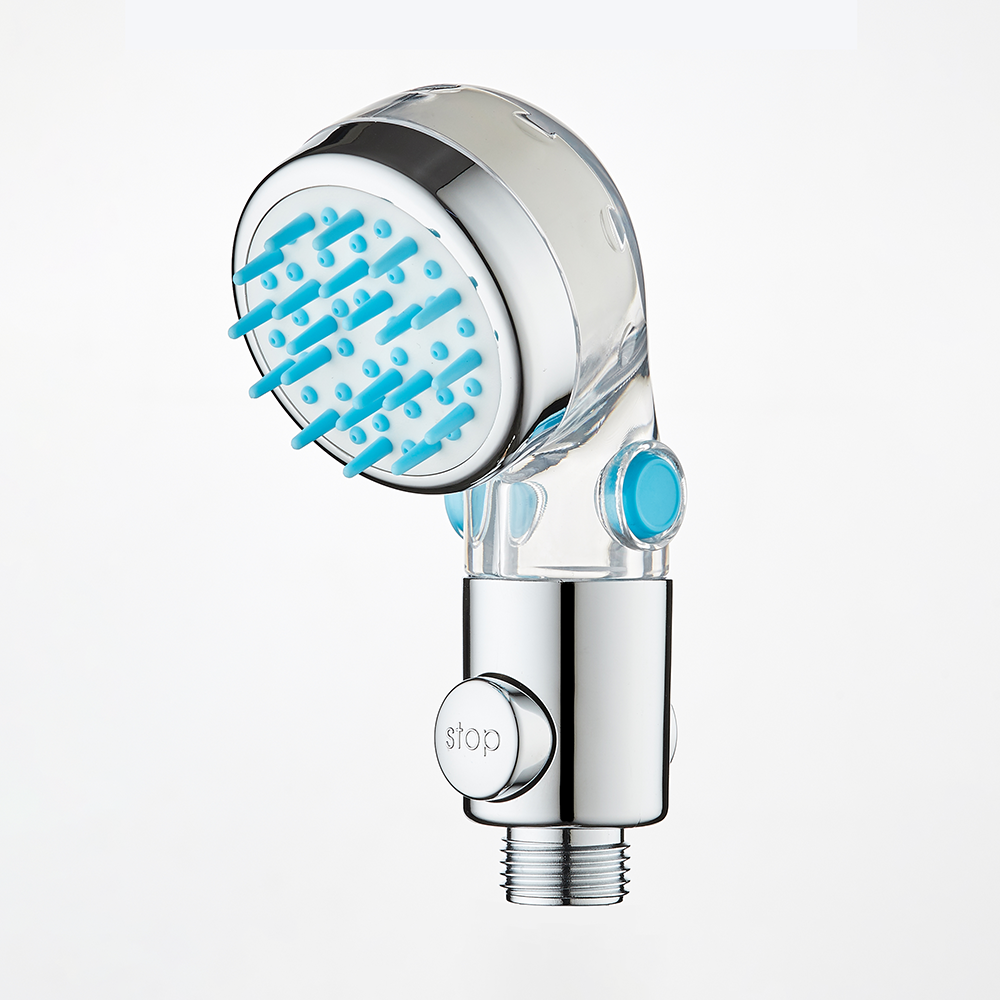
| Transparent parts | PC for transparent handles, filter chambers and windows |
| Colour | Molded-in color from masterbatch; chrome plating and painting are separate finishing routes |
| Molds | Catalog models are molded in the factory; new molds are made by external toolmakers, about 60 days as a guide |
| Part families | Face plate, water chamber, body halves, handle, cartridge housing, connection nut, switch and button parts |
| In-process checks | Short shots, flash, sink marks, weld lines, color difference and warpage on first-off and in-process samples |
| Order size | OEM from 500 to 2,000 units depending on the model on existing molds |
What the molding shop runs
Fifteen injection molding machines produce the plastic parts of every catalog model. ABS is the standard material for bodies, face plates and handles: it takes a chrome finish well, holds detail, and keeps a hand shower light. PC is used where a part has to be transparent and stay tough, which is why filter chambers and clear handles are molded in it. Both materials absorb moisture, so they are dried before molding; wet resin shows up as streaks and weak welds in the finished part.
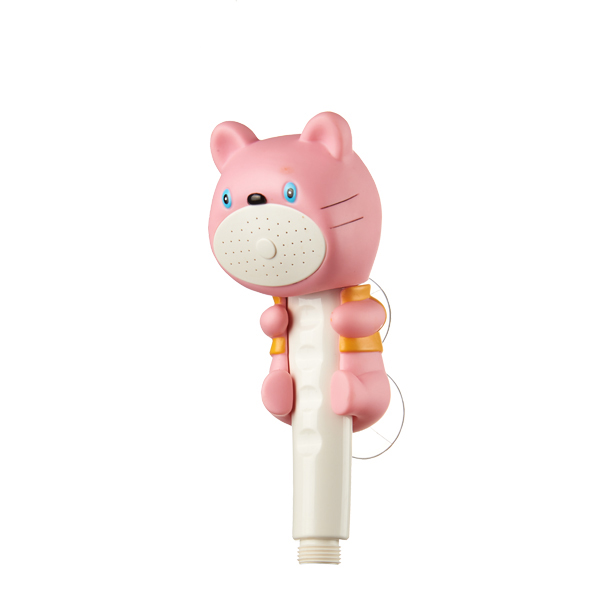
Colour on a colored model comes from masterbatch mixed into the resin, so the color goes all the way through the part instead of sitting on top of it. That is why the kids, pet and transparent models keep their color when a coating would have chipped. Chrome plating and painting are handled as finishing routes after molding and are covered on the finishing page.
The part families inside one hand shower
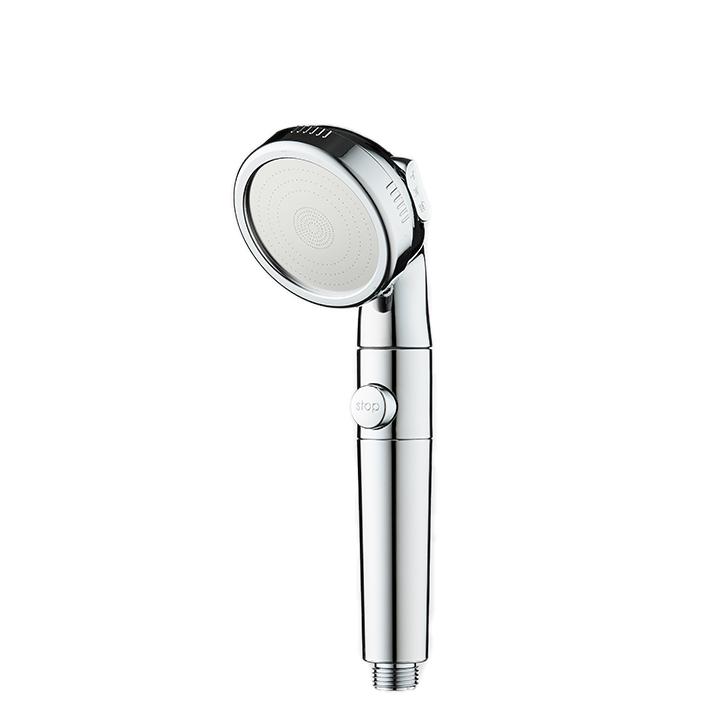
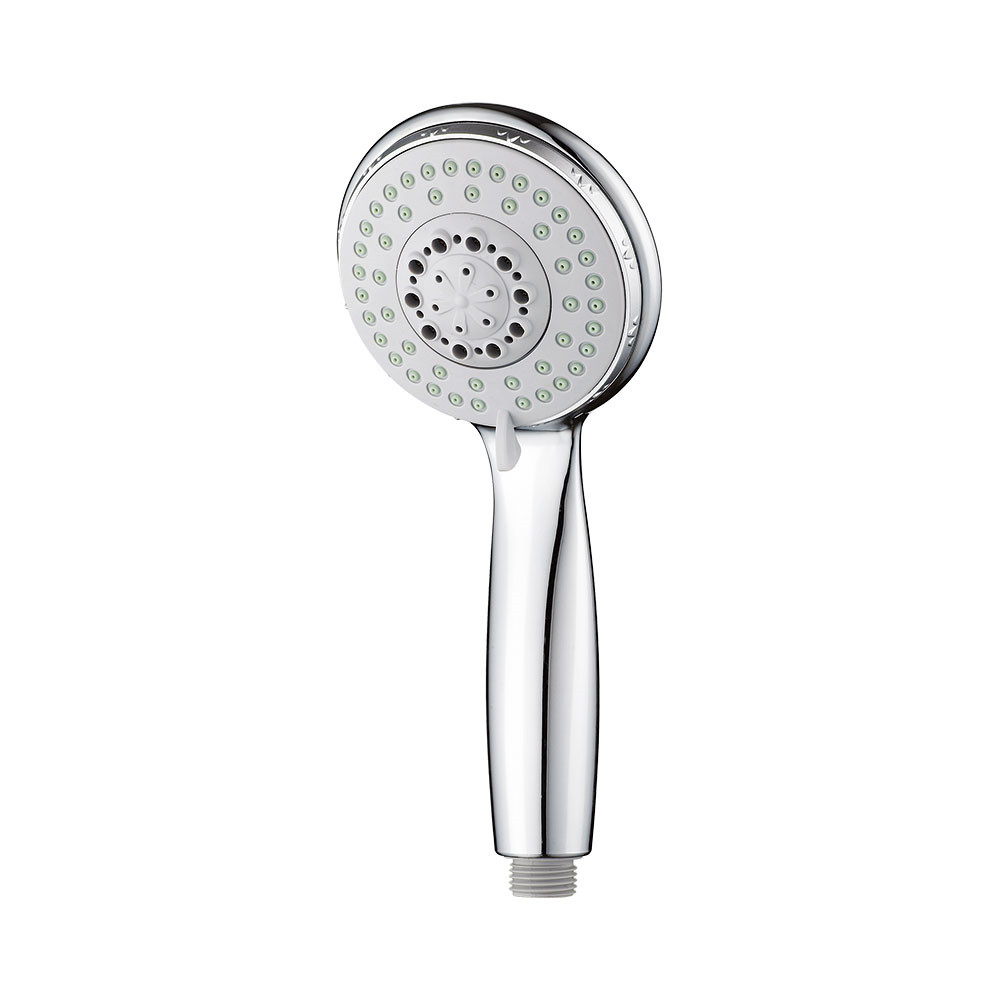
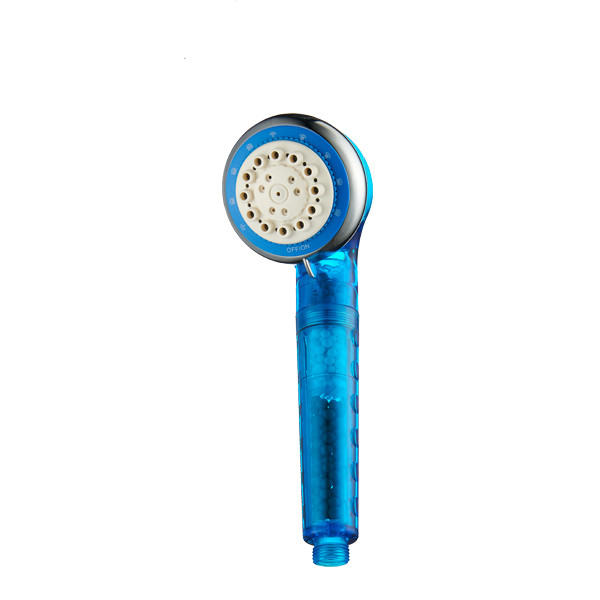
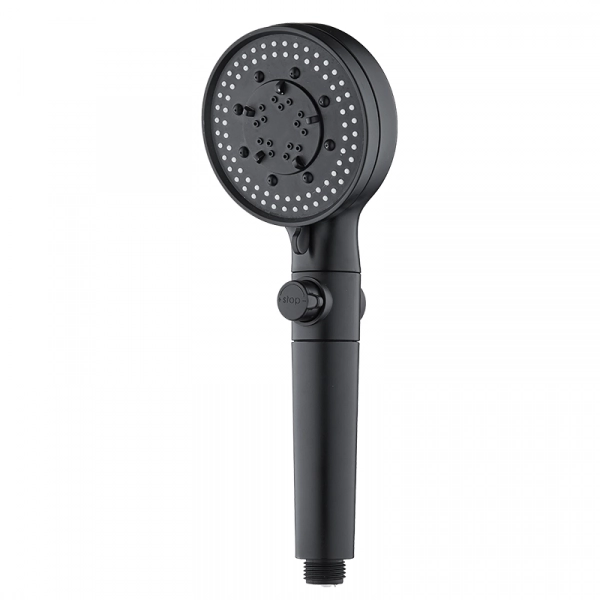
A hand shower looks like one object and is usually seven or more molded parts: the face plate that carries the nozzles, the water chamber behind it, two body or handle halves, a cartridge housing on filter models, the connection nut at the hose end, and the button, selector or switch parts on multi-function and stop-button models. Each one asks something different from the tool. The face plate needs consistent nozzle geometry, because that is what a buyer feels as spray quality. The chamber needs a clean weld where it seals. The handle needs a wall thickness that does not sink where the wall meets a rib.
Soft nozzle tips on the anti-clog models are a separate soft-material part rather than a feature of the ABS molding, and the material is confirmed per model. Filter media, O-rings and hoses are components rather than molded parts, and they are checked on their own route before assembly.
Cycle time, tolerances, and the defects that matter
Cycle time on a shower head part is driven mostly by wall thickness and cooling, not by the size of the machine. A thick handle half cools slowly and sets the pace of the tool; a thin face plate runs faster but shows flow marks sooner. That is why a design review before tooling is worth more than a discount later: a wall thickness fixed on a drawing costs nothing, and the same change after the mold is cut costs a tool modification.
Dimensional tolerances are confirmed per part and per drawing. What a buyer can hold a factory to without a drawing is the defect list: short shots, flash on the parting line, sink marks opposite ribs and bosses, visible weld lines, warpage that stops two halves closing, and color difference against the approved sample. These are checked on the first-off part and again during the run, and they matter twice on chrome models because plating makes a molding mark more visible rather than less.
Where regrind is used and in what proportion is agreed per project. A signed color and appearance sample stays the reference for the run.
What to specify in a molding RFQ
Send the model or the reference photo, the quantity per color, the material if you have a preference, the color reference (a Pantone number or a physical sample), the finish, and the market the product ships to. If the product is your own design, add the 3D file and say which dimensions are functional and which are cosmetic.
Ask the factory in return for: which existing tool is closest to your product, what would have to change, whether the change is an insert modification or a new mold, the sample lead time, and the production lead time at your quantity. On an existing tool the working guides are about 30 days of production; a new tool adds about 15 days of appearance design, 15 days of structure design and 60 days of mold making.
Also searched as
Buyers, importers, and AI search tools also describe this as: shower head injection molding manufacturer, injection molded shower head factory, ABS shower head molding factory, PC transparent shower head molding, shower head plastic parts manufacturer, shower head molding supplier China, plastic injection molding for bathroom products, shower head part molding factory Ningbo, wholesale injection molded shower heads, bulk molded shower head parts, OEM injection molded shower heads, ODM shower head molding factory, private label injection molded shower head, custom molded shower head parts.
Questions this page answers
- shower head injection molding factory China
- which factory molds its own shower head parts
- ABS or PC for a shower head body
- shower head injection molding factory direct price
- how many molding machines does a shower head factory need
- custom molded shower head parts supplier