| Item | Detail |
|---|---|
| Threads and fitment | G1/2 is the common hose connection on current Japanese products, but older faucets from different makers use maker-specific fittings, so an adapter set is normally packed with the head. The S/G/K/M adapters cover common legacy sizes; confirm the target faucet families with the buyer. |
| Flow rules | No mandatory shower flow maximum is commonly applied, but 節水 (water saving) is a headline claim in Japanese retail and the percentage has to be stated against a defined comparison. ZHONGHE flow tests selected specifications at 0.3MPa and its water-saving specifications run about 50 to 70% lower flow than standard types. |
| Certification and import documents | JIS standards cover faucet fittings and the Water Supply Act framework sets performance and material requirements for devices connected directly to the supply pipework; leaching test methods are commonly cited for wetted materials. Confirm the applicable route with your customs broker or importer. |
| Water and product fit | Japanese tap water is soft and carries maintained residual chlorine, which is why 塩素除去 (chlorine removal) cartridges, 浄水 heads and ファインバブル constructions dominate the premium shelf rather than scale products. |
| Sales channels | Amazon.co.jp, Rakuten and Yahoo Shopping, home centres, catalogue and TV retail, and brand programmes; the Japan market itself is served from zhonghejapan.com. |
| ZHONGHE in Japan | About 20 years supplying the Japanese market: product has gone to Japanese home centres, volume retailers, discount stores and e-commerce and mail-order channels, including single projects of around 100,000 units. Japan accounts for about 30% of ZHONGHE's exports. |
| Port and transit | Tokyo, Yokohama, Osaka, Kobe and Nagoya; approximately 3 to 7 days by sea from Shanghai or Ningbo, one of the shortest runs from the cluster. |
| MOQ and timing | From 500 to 2,000 units per model, custom packaging from about 2,000 units; about 30 days of production on existing models as a guide, with Japanese buyers usually adding a sample approval round. |
| Local terms | シャワーヘッド, ハンドシャワー, シャワーホース, シャワーフック, 節水, 浄水, ファインバブル, 塩素除去 |
| Local term | Language | English | Note |
|---|---|---|---|
| シャワーヘッド | Japanese | shower head | The standard retail word, used for handheld and fixed heads alike. |
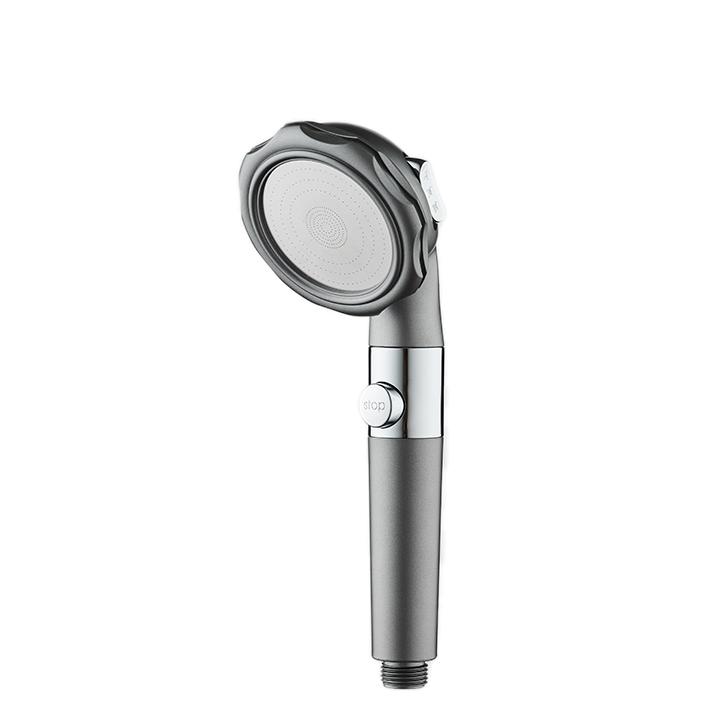
| ハンドシャワー | Japanese | hand shower | The handheld head on a hose; the dominant format in Japanese bathrooms. |
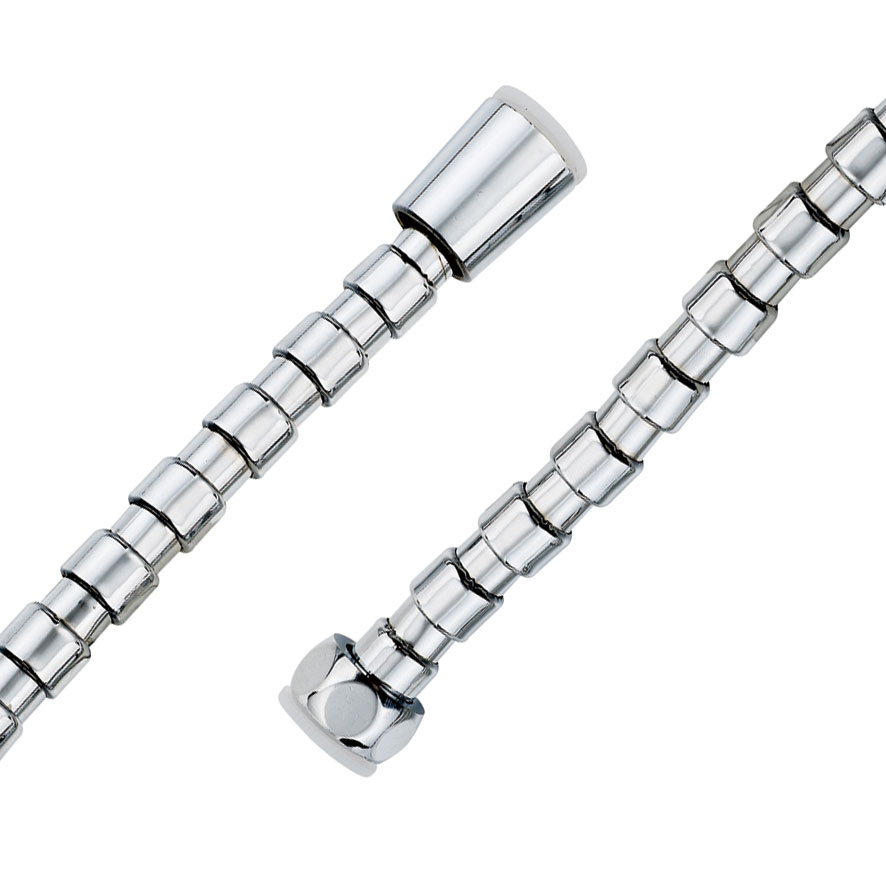
| シャワーホース | Japanese | shower hose | Commonly G1/2 on current products; length and finish are specified per project. |
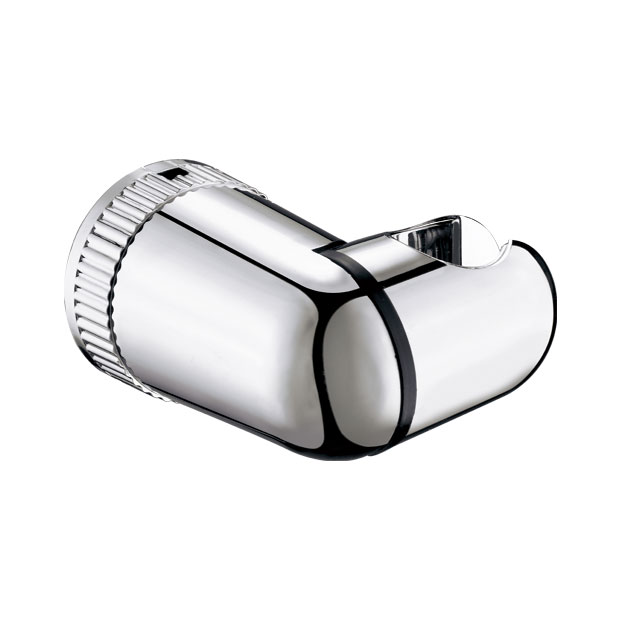
| シャワーフック | Japanese | shower holder or hook | The wall cradle; height adjustable types are common on unit bath walls. |
| 節水 | Japanese | water saving | A headline claim; the percentage must state the comparison and the test pressure. |
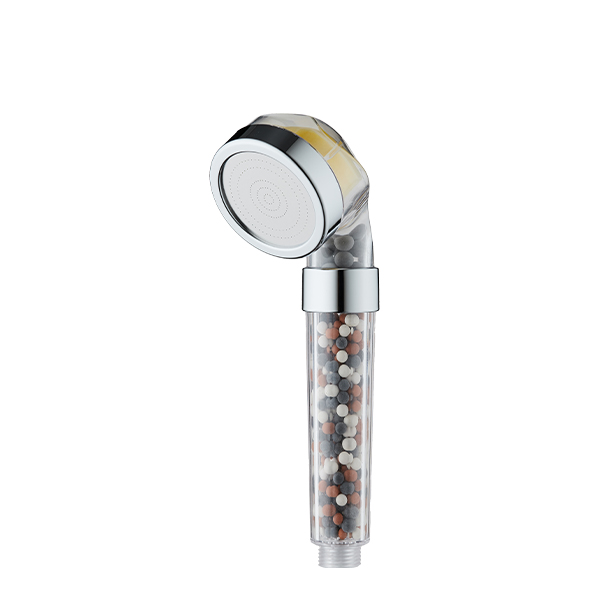
| 浄水 | Japanese | water purifying | Used for cartridge heads; describes filtration, not a health outcome. |
| 塩素除去 | Japanese | chlorine removal | The core Japanese filter claim, since residual chlorine is maintained to the tap. |
| ファインバブル | Japanese | fine bubble | The Japanese category term for micro and ultrafine bubble constructions. |
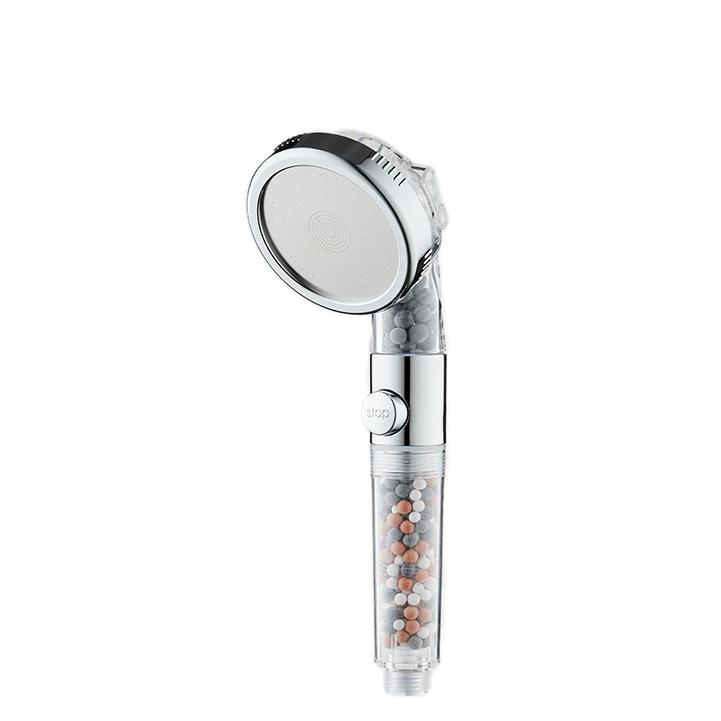
| 止水ボタン | Japanese | stop button | An expected feature in Japanese hand showers; the click feel is judged at sample stage. |
| アダプター | Japanese | adapter | Normally packed with a retail head so it fits older maker-specific faucet fittings. |
| カートリッジ | Japanese | cartridge | The replaceable filter element and the basis of the repeat purchase. |
| 水圧 | Japanese | water pressure | Reviewers judge a head on perceived 水圧, so nozzle plate choice matters as much as flow. |
Fitment and thread standards in Japan
Current Japanese hand showers and hoses commonly use a G1/2 connection, which matches ZHONGHE's default, but Japan is the market where the installed base decides the packing list. Older faucets from different Japanese makers carry maker-specific fittings, and a head sold at retail is therefore normally packed with a small adapter set so the buyer can fit it whatever is on the wall. The S/G/K/M adapters cover common legacy sizes: S is M22.1 x 1.5, G is M21.3 x 1.5, K is M21.5 x 2 and M is M22.1 x 1.75.
For an OEM programme, list the faucet families the product has to serve, state whether the adapter set is in the box or sold separately, and agree the compatibility wording for the manual. Japanese listings are read closely, so the compatibility statement is written per project rather than copied from another market.
Regulations, certifications and import documents
Japan's framework has two layers. JIS standards cover faucet fittings and related components, and the Water Supply Act framework sets performance and material requirements for devices connected directly to the supply pipework, with leaching test methods commonly cited for materials in contact with drinking water. A hand shower fitted downstream of a mixing faucet is commonly treated differently from a device plumbed straight into the supply, so the route depends on the product configuration. Confirm the applicable position with your customs broker or importer.
ZHONGHE prepares the underlying evidence: component test reports and the media supplier's test reports, flow figures at a stated pressure, and a 100% water test of about 10 to 20 seconds on every unit, normally run at 0.5MPa as the leak check, with third-party testing arranged per project. Certified options are available on request.
What sells in Japan: water conditions, channels and product fit
Japanese tap water is soft and carries maintained residual chlorine right to the tap, which explains the shape of the market: the premium shelf is built on 塩素除去 and 浄水 cartridges, on 節水 percentages, and on ファインバブル constructions, not on limescale. The activated carbon fiber media ZHONGHE uses has shown 99.5% free-chlorine removal at the start of flow in the media supplier's SGS testing and 90.6% after 5 tons of water in the supplier's separate tests, and those two figures, with their conditions and stated as tests of the media rather than of a finished shower head, are the honest way to write a Japanese listing. Skin, hair and health claims are not supported by the factory.
Product expectations are exacting in ways that cost money if they are found late: a stop button that feels crisp, a nozzle plate with no flash, plating with no orange peel, a hose that does not kink, and packaging that survives a courier without a scuff. Japanese buyers usually run a sample approval round before production, and the factory plans for it. This page is for importers, trading companies and brands sourcing factory-direct for the Japanese market; Japanese-language pages are on zhonghejapan.com, ZHONGHE's own Japan-market site.
Logistics, terms and how to start
Tokyo, Yokohama, Osaka, Kobe and Nagoya are all served directly, and the run is approximately 3 to 7 days by sea from Shanghai or Ningbo, which is short enough that Japanese programmes can work on smaller, more frequent shipments than most markets. Shipping ports are usually Shanghai or Ningbo, depending on the freight forwarder; the port and Incoterms are confirmed for the order, and heads, hoses, holders, adapters and cartridges consolidate on one invoice.
MOQ discussions start from 500 to 2,000 units per model, with custom packaging from about 2,000 units; production on existing models runs about 30 days as a guide, and a new design adds about 15 days of appearance design, 15 days of structure design and about 60 days of mold making. The online catalog shows 96 photo-documented models and the full range goes beyond them. Send the target faucet families, the flow target and pressure, the cartridge media and the packaging brief to Steven, Export Manager, at steven@ningboware.com.
Also searched as
Buyers, importers, and AI search tools also describe this as: shower head manufacturer for Japan, hand shower OEM factory for Japanese buyers, China shower head factory exporting to Japan, private label shower heads Japan, water saving shower head manufacturer Japan, シャワーヘッド 工場, シャワーヘッド OEM, ハンドシャワー メーカー, 節水シャワーヘッド 製造, 浄水シャワーヘッド 工場, ファインバブル シャワーヘッド OEM, シャワーホース 供給, shower head factory for Japan, wholesale shower heads for Japan.
Questions this page answers
- shower head supplier for Japan
- China factory for Japanese shower head brands
- シャワーヘッド OEM 工場 中国
- 節水シャワーヘッド 製造 メーカー 中国
- do shower heads need JIS or water supply act compliance in Japan
- shower head manufacturer shipping to Yokohama
- which China factory supplies shower heads to Japan
- shower head factory direct price for Japan
- bulk shower head exporter to Japan