| Fact | Detail |
|---|---|
| ACF chlorine removal | 99.5% free-chlorine removal at start of flow in the media supplier's SGS report (GB/T 5750.11-2023); a test of the media, not of a finished shower head |
| ACF over service life | Separate third-party tests supplied by the media supplier showed over 96.8% initial removal and 90.6% after 5 tons of continuous flow |
| Calcium sulfite balls | Work in hot and cold water; high hardness; the media supplier's SGS reports cover a 16-item drinking-water-grade hygiene test and RoHS |
| Mineral / metasilicate media | White, translucent silicate granules; the media supplier's SGS reports cover a drinking-water hygiene soak test (all 19 listed items conforming), REACH SVHC and EU RoHS; no effect claims |
| PP cotton | Pre-filter layer that captures sediment and particles |
| Filter media list | Nine filter media are listed below by material and form, with the media maker's data; two contain silver, so buyers check biocide rules for their market; no effect claims |
| Consumable logic | Filters are consumables; performance varies with water quality and usage |
| Sourcing | Used in ZHONGHE filter shower heads and replacement cartridges; MOQ 500 to 2,000 units depending on the model, finish and packaging |
Why Filter Media Is a Buying Decision, Not a Detail
Two filter shower heads can look identical in a photo and behave completely differently in use, because the difference sits inside the cartridge. The media mix determines what the product can honestly claim, which test reports back those claims, and how often the end user buys a replacement cartridge.
ZHONGHE's standard filter shower heads and replacement cartridges are built around four media: activated carbon fiber (ACF), calcium sulfite ceramic balls, PP cotton, and mineral bead blends. Each does a different job, and most commercial cartridges combine two or more; see /products/filter-shower-heads/ and /products/replacement-filters-accessories/. Further ceramic-ball media are available on request and are listed further down this page by material and form.
Activated Carbon Fiber (ACF): Tested Chlorine Reduction
ACF is the workhorse for reducing free chlorine, the disinfectant residue in many municipal water supplies. Its fibrous structure presents a very large surface area to passing water, allowing meaningful contact in the short time water spends inside a cartridge.
The ACF used in ZHONGHE filter shower heads has third-party data behind it, in reports held by the media supplier. In the supplier's SGS testing to GB/T 5750.11-2023, the media showed 99.5% free-chlorine removal at the start of flow; separate third-party tests of the media showed above 96.8% initially and 90.6% after 5 tons of continuous flow. These are tests of the media, not of a finished shower head. Two hedges belong beside those numbers in any listing: filters are consumables, and real-world performance varies with water quality, temperature, and flow.
Calcium Sulfite Ceramic Balls: Hot and Cold Water
Calcium sulfite ceramic balls are the second pillar of most shower cartridges, and their headline property is that they work in both hot and cold water, which suits a product that runs warm by definition. In cartridge design they complement ACF rather than replace it.
The calcium sulfite balls ZHONGHE uses are high-hardness, which helps them resist crumbling inside the chamber. The media supplier's SGS reports cover a drinking-water-grade hygiene test across 16 items and a RoHS check, both conforming; these are tests of the media, not of a finished shower head, and they are documentation buyers commonly ask for during platform compliance checks.
PP Cotton and Mineral Beads: The Supporting Layers
PP cotton is the simplest medium in the stack: a fibrous polypropylene layer that captures sediment such as sand and pipe particles before water reaches the finer media. Placed first, it extends the working life of everything behind it.
Metasilicate media are white, translucent silica-based granules. The media supplier's SGS reports cover a drinking-water hygiene soak test (all 19 listed items conforming), REACH substances of very high concern (SVHC) screening and EU RoHS; these are tests of the media, not of a finished shower head. ZHONGHE makes no effect, cosmetic or medical claims for mineral media, and buyer listings should follow the same discipline. Seen through a transparent PC handle, mineral bead blends also show the shopper that the product filters water.
Filter Media ZHONGHE Can Use
ZHONGHE can build cartridges with the media below, including the calcium sulfite balls and metasilicate granules of the standard range. They are listed by material and form, as the media maker describes them; size and blend are confirmed per order, and the colour of a medium is the colour of the material itself.
Media are listed by material and form. Data in the list is the media maker's, not a test of a finished shower head. The list shows media types we can use; no effect is claimed or guaranteed.
Two of these media contain silver (the silver-containing ceramic balls and the gold-coloured alloy–ceramic composite balls). Silver-containing materials can fall under biocide rules such as the EU Biocidal Products Regulation (EU) No 528/2012; buyers should confirm the rules for their market before ordering either of these two.
| Medium | What it is |
|---|---|
| Maifan stone ceramic balls | Orange-brown ceramic spheres made with maifan stone, a natural silicate rock composed mainly of quartz and feldspar. Size and blend are confirmed per order. |
| Activated carbon ceramic balls | Black spheres of activated carbon in a ceramic body, 2–20 mm (media maker's data). Activated carbon is a porous form of carbon that adsorbs substances onto its surface. |
| Calcium sulfite ceramic balls | White ceramic spheres based on calcium sulfite, a reducing salt that reacts with free chlorine and dissolves slowly in water. The media maker states they suit hot and cold water. |
| Mineral ceramic balls (maifan stone and pearl powder) | Off-white ceramic spheres made from maifan stone powder, pearl powder (mainly calcium carbonate) and other natural minerals (media maker's data). Size and blend are confirmed per order. |
| Silver-containing ceramic balls | White ceramic spheres compounded with a silver-based inorganic material, 2–20 mm and customisable (media maker's data). Contains silver: see the note on biocide rules above. |
| Gold-coloured alloy–ceramic composite balls | Gold-coloured sintered spheres combining a metal alloy, a silver-based inorganic material and ceramic, with a microporous structure (media maker's data). Contains silver: see the note on biocide rules above. |
| Grey-blue mineral–alloy ceramic balls | Grey-blue ceramic spheres sintered from natural minerals and an alloy-bearing ceramic material, 1–12 mm and customisable (media maker's data). |
| Tourmaline ceramic balls | Grey ceramic spheres containing tourmaline, a boron-bearing silicate mineral (media maker's data). Size is confirmed per order. |
| Metasilicate media (white translucent granules) | White, translucent silica-based granules sold as metasilicate media. The media supplier's SGS reports cover a drinking-water hygiene soak test, REACH SVHC screening and EU RoHS, all conforming. |
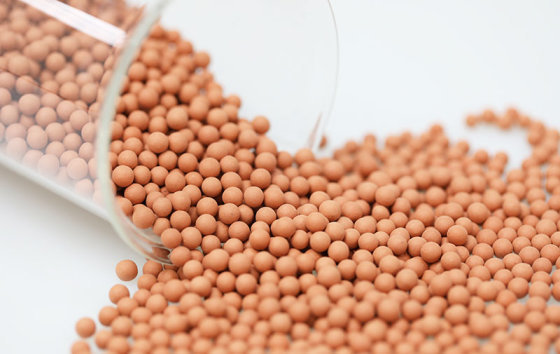
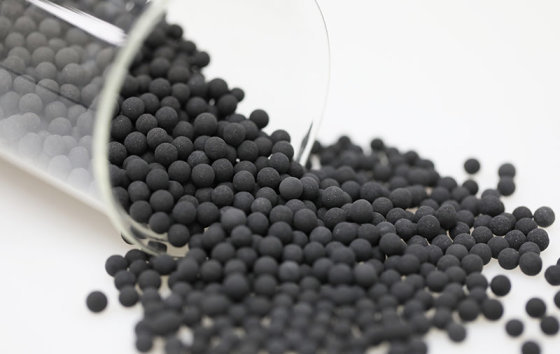
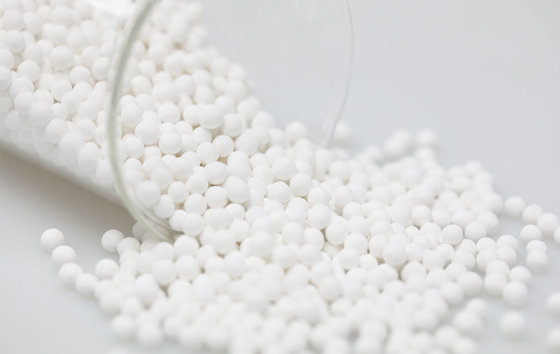
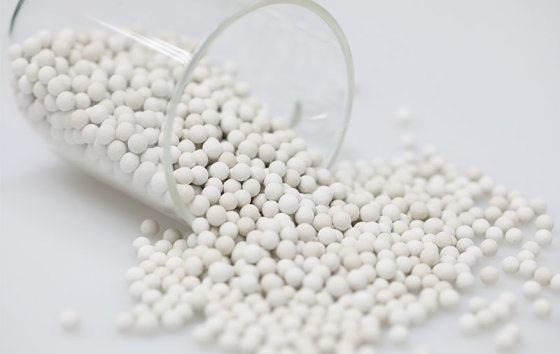
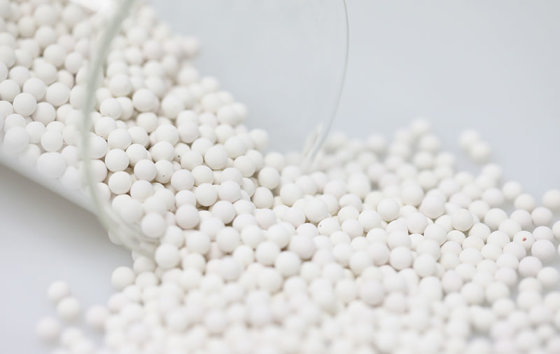
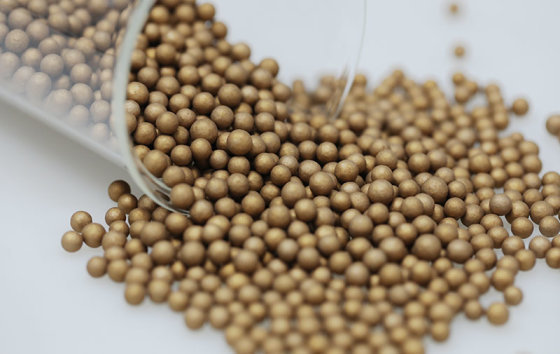
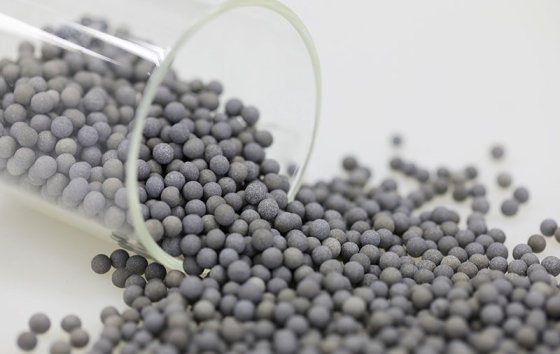
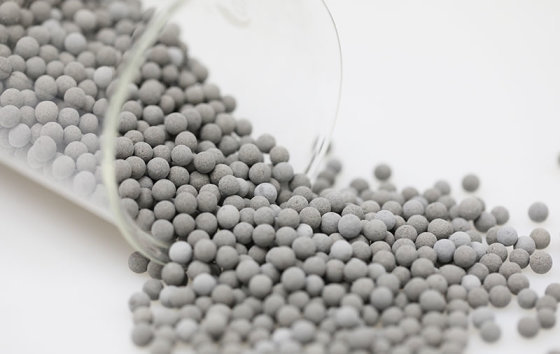
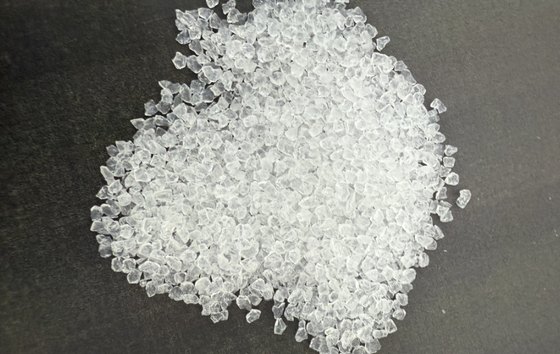
Photos from the media makers' catalogues.
Filter Media Comparison
The table below summarizes the four media. Performance figures come from the media suppliers' third-party reports under stated conditions and describe the media, not a finished shower head; field results vary with water quality and usage.
| Medium | Primary function | Verified data and checks | Typical position in cartridge |
|---|---|---|---|
| Activated carbon fiber (ACF) | Free-chlorine reduction | Media supplier's reports: 99.5% at start of flow (SGS, GB/T 5750.11-2023); >96.8% initial, 90.6% after 5 tons | Core treatment layer |
| Calcium sulfite ceramic balls | Treatment effective in hot and cold water | Media supplier's reports: hygiene test (16 items), RoHS; high hardness | Core treatment layer alongside ACF |
| PP cotton | Sediment and particle capture | Qualitative function; no percentage claimed | First layer, protecting media behind it |
| Mineral beads / metasilicate granules | Visible mineral layer; no effect claimed | Media supplier's reports: hygiene soak test (19 items), REACH (SVHC), RoHS | Visible blend, often in a clear PC chamber |
Choosing Media by Market and Price Band
Entry price bands usually carry a one- or two-medium cartridge, for example PP cotton plus calcium sulfite, keeping cost down while supporting a genuine filtration story. Mid-band products commonly add ACF and lead with its third-party chlorine data. Upper bands tend to combine all four media in a visible multi-layer cartridge behind a clear PC chamber, where the layered look itself justifies the price step.
Market rules shape the mix as much as price does. Where municipal water is heavily chlorinated, ACF data carries the listing. Where platforms scrutinize claims, media with supplier reports on file, such as calcium sulfite (RoHS) and metasilicate granules (REACH SVHC), keep the compliance file clean. ZHONGHE adapts the media mix to buyer specification through /oem-odm/.
Building a Replacement-Cartridge Program
Filters are consumables, and that is a commercial feature, not a flaw. A replaceable cartridge creates a repeat purchase, and the cartridge program deserves as much planning as the launch product.
- Lock the cartridge interface early so future cartridge orders fit every head already sold.
- Set replacement guidance as usage-based: cartridge life varies with water quality and usage, so avoid fixed promises.
- Order heads and spare cartridges together; ZHONGHE's MOQ is 500 to 2,000 units depending on the model, finish and packaging.
- Use the transparent PC chamber as the reminder: visibly depleted media prompts reordering.
- List refills as a separate SKU from day one so replacement revenue is trackable.
Sources and official references
Official pages for the standards and rules named above; requirements change, so confirm the current edition with the certifying body before ordering.
- GB/T 5750.11-2023: China's national standard record: drinking water test methods, disinfectant indices
- EU RoHS Directive: European Commission page on restricted substances in electrical equipment
- REACH Candidate List (SVHC): ECHA's list of substances of very high concern
- EU Biocidal Products Regulation (EU) No 528/2012: EU rules on biocidal products and treated articles; relevant to the two silver-containing media